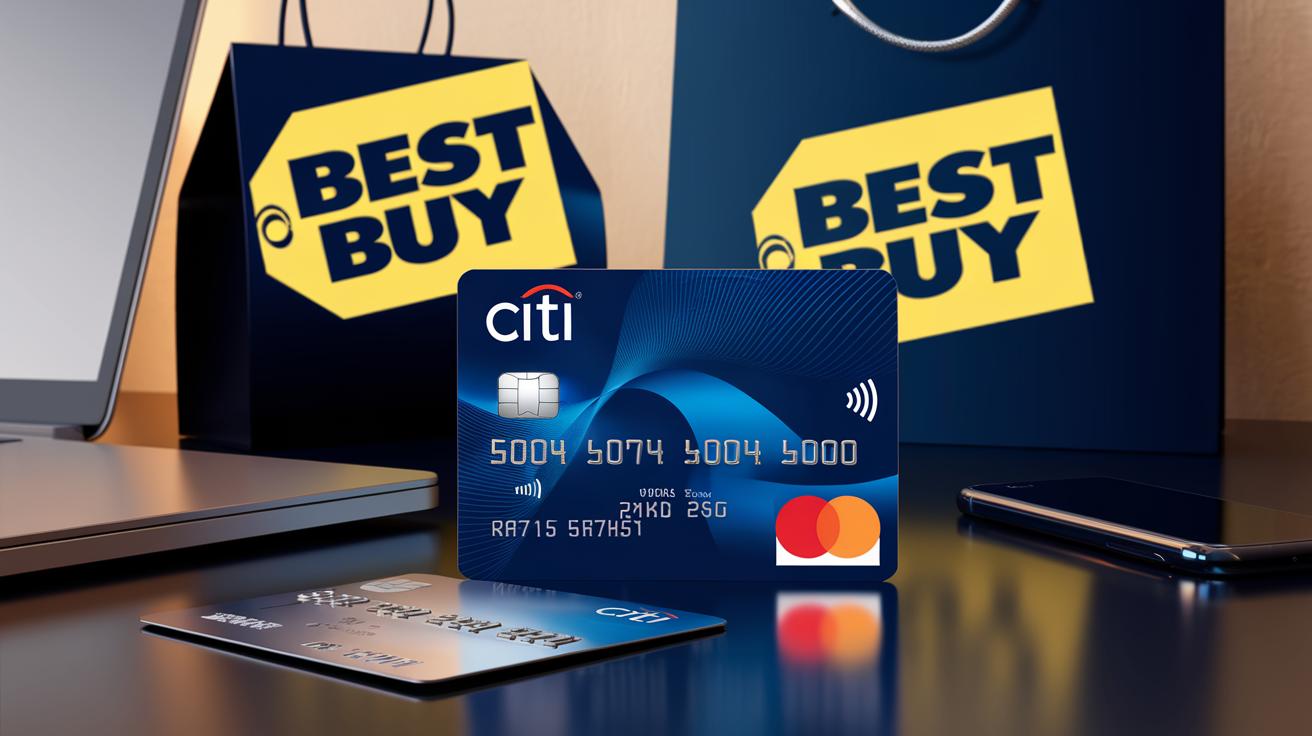
When Is 0% Interest Financing Actually Free Money—and When Is It a Maze?
The Citi® Best Buy Credit Card offers two broad pathways: conventional rewards on purchases or promotional store financing, typically 0% APR for set periods on tech buys. But the critical question isn’t “Which offers more points or zero interest?” It’s: How does each affect your actual money flow and long-term financial health?
Most people hear “no interest” and jump in, missing the nuances that can turn a seemingly free ride into a costly detour. to decode this, let’s trace the precise cash flows and timing behind the card’s offers.
The Step-by-Step Flow of Store Financing
Imagine you buy a $1,200 laptop under Citi’s 18-month 0% APR plan:
- You pay no interest if the entire balance is cleared by month 18.
- Monthly minimum payments (often set so you’ll pay off on time) extract cash regularly, reducing principal linearly.
- If you miss a payment, financing charges can be retroactively applied from the purchase date—sometimes with hefty penalty APRs.
- Rewards typically do not accrue on financing payments or partial balances tied directly to promotional balances.
Contrast that with a rewards purchase made using the same card but paying the balance in full every month:
- Points accumulate on all eligible purchases, potentially translating to 5% back at Best Buy.
- No financing offers apply; you pay the entire $1,200 upfront or quickly pay the full balance.
- You avoid the risk of interest charges if you keep up with payments.
This breakdown clarifies where “free financing” lives: strict discipline on payment timing and no late slips.
Why the Allure of Store Financing Traps Many in Hidden Costs
From a behavioral viewpoint, store financing carries notable pitfalls that emerge less from the terms and more from human habits.
1. Optimism Bias & Planning Fallacy: It’s easy to assume you’ll pay off the balance early or on time. But unexpected expenses often delay payments, triggering deferred interest charges retroactively.
2. minimum Payment Myths: Monthly minimums can feel manageable, yet thay leave principal lingering longer, effectively prolonging exposure to risk if you slip. Many mistake “minimum” for “ideal.”
3. Overlooking Rewards Prospect Cost: Turning to financing means focusing on deferred payments,but this often sacrifices the ongoing REWARD accrual that cash purchases would have provided,especially with a high-reward card.
4. Misinterpretation of APR “0%” Labels: Consumers forget that 0% APR is promotional and conditional. Miss a requirement, and APR can jump dramatically on the entire balance from day one.
Combine these biases with the brain’s preference for “small immediate outflows” (minimum payments) over large lump sums, and you see why store financing often backfires.
Gains and Sacrifices When Comparing Rewards to Financing—Not an Either-Or Game
Assessing the Citi Best Buy Credit Card’s financing against its rewards involves more than checking perks.Consider this trade-off:
| Aspect | Store Financing | Rewards Option |
|---|---|---|
| Cash Flow Timing | Spread payments over months; immediate cash relief | Pay full amount upfront; no cash flow delay |
| interest Risk | Zero if perfect execution; high if late or partial payment | No interest if balance fully paid monthly; variable if carried |
| Rewards Earnings | Typically none or limited on financed purchases | Up to 5% back at Best Buy, plus other rewards |
| financial Discipline Required | High (strict payment schedule adherence) | Medium (avoiding unpaid balances) |
| Adaptability | Built-in installment plan, no multiple loan applications | Standard revolving credit; more flexible but potentially costlier over time |
neither path is universally superior.As with all credit tools, the key lies in matching personal financial behavior and goals with product mechanics.
For tech enthusiasts who can pay off their purchase in months and want no upfront dent, store financing can be a tactical choice. But for those who prioritize rewards earnings and can handle lump-sum or speedy payments, the rewards route maximizes value.
Over Time, Rewards Build Wealth While Missed Payments Compound Losses
Long-term views reveal something that initial sticker shocks hide: rewards accumulate steadily, but financing missteps amplify costs exponentially.
Consider a repeat buyer cycling between financing offers and rewards payments:
- Reinvesting rewards earned boosts buying power or offsets other spending, compounding benefits in a way store financing does not.
- Conversely, any missed payment on financing invokes retroactive interest, adding hundreds or thousands over months.
- The prospect of deferred interest frequently enough encourages higher spending with fixed income, increasing debt burden.
Furthermore,revolving balances associated with rewards cards tend to encourage paying at least minimums but beware of interest erosion on carried balances,which differs significantly from structured 0% plans.
Consumer Finance Protection Bureau’s guide stresses that interest charged on unpaid revolving balances may far exceed interest “saved” from hypothetical rewards.
Who Really Gains from Offering Store Financing? A Closer Look at the Issuer’s play
Citi’s motivation to offer store financing isn’t just generosity—it’s a calculated balancing act:
- Store financing attracts customers to best Buy’s higher ticket items, expanding sales volume.
- The bank captures risk-graded borrower segments willing to carry balances.
- Retroactive interest provisions provide a safety net, allowing the issuer to recover losses from behavioral slip-ups.
- By bundling Best Buy exclusives with financing, Citi deepens customer lock-in.
These incentives explain why terms look generous upfront but tighten dramatically behind late payments. For the issuer, the game is volume plus selective risk capture, not equitable cost-free credit.
Consumers who fail to meet exact criteria become unexpectedly lucrative. This dilemma matches a broader pattern in installment credit products aimed at “responsible but sometimes fallible” borrowers.
Deciding When to Use Store Financing or Stick to Rewards
What really guides a smart decision here? Let’s apply a simple filter to your situation:
- Can you fully pay the financed purchase before the promotional period ends?
– Yes: Store financing may save interest and improve cash flow.
– no: Store financing is risky; consider rewards purchases with timely payments. - Do you have a track record of consistent, on-time credit card payments?
– Yes: Store financing’s risk diminishes; you can use it and still avoid interest.
– No: Rewards cards with manageable balances likely safer. - Are rewards points worth more to you than the cash flow flexibility?
– Yes: Pay upfront and capture rewards.
– No: Store financing adds flexibility without immediate cost. - How do unexpected expenses typically impact your budget?
– frequent disruptions suggest avoiding store financing risk requiring strict paydown schedules.
This heuristic allows well-informed users to select the option that strikes the right balance between cash flow and cost optimization.
What Happens If You Get It Wrong? The Hidden Debt Trap Nobody Warns About
If you treat store financing as a “risk-free” line of credit,trouble lurks in the fine print:
- Deferred interest reversal: Miss a payment,and interest is calculated retroactively from purchase—a sudden,large unexpected hit.
- Credit score damage: Missed payments hurt FICO scores, raising future borrowing costs beyond this one purchase.
- Loss of reward multiplier: Financing purchases often exclude or reduce rewards, meaning opportunity cost is double.
- Behavioral creep: relying on financing can enable overspending, masking actual affordability.
Recognizing these traps before they arise is key to safeguarding your credit and long-term financial health.
In contrast, rewards cards demand more proactive behavior but reward discipline generously.
Tying It All Together: When store Financing Fits and When Rewards Make more Sense
Imagine three consumer profiles:
- Jane, the Planner: Has a steady income, saves for big buys, pays balances in full. Best off maximizing rewards with the Citi Best buy Card.
- Mark, the Cash Flow Balancer: Prefers spreading out payments and has excellent payment discipline. store financing suits him well.
- Lisa, the Unpredictable Spender: Finds flexible payments tempting but sometimes misses deadlines.Store financing is risky; she should lean on rewarding cards with tighter controls or cash savings.
Neither rewards nor financing is simply “better.” The smartest choice emerges after honestly evaluating your payment habits, financial resilience, and risk tolerance.
also, compare the Citi Best Buy Card to other issuer offers that combine rewards and financing differently. Sometimes a third-party credit card or personal loan provides superior flexibility.
In all cases, consult up-to-date details directly on Best Buy’s official Citi Card page and cross-check with resources on Experian’s credit card basics to stay informed.




Have any thoughts?
Share your reaction or leave a quick response — we’d love to hear what you think!
-
 0
0
-
 0
0
-
 0
0
-
 0
0
-
 0
0
-
 0
0