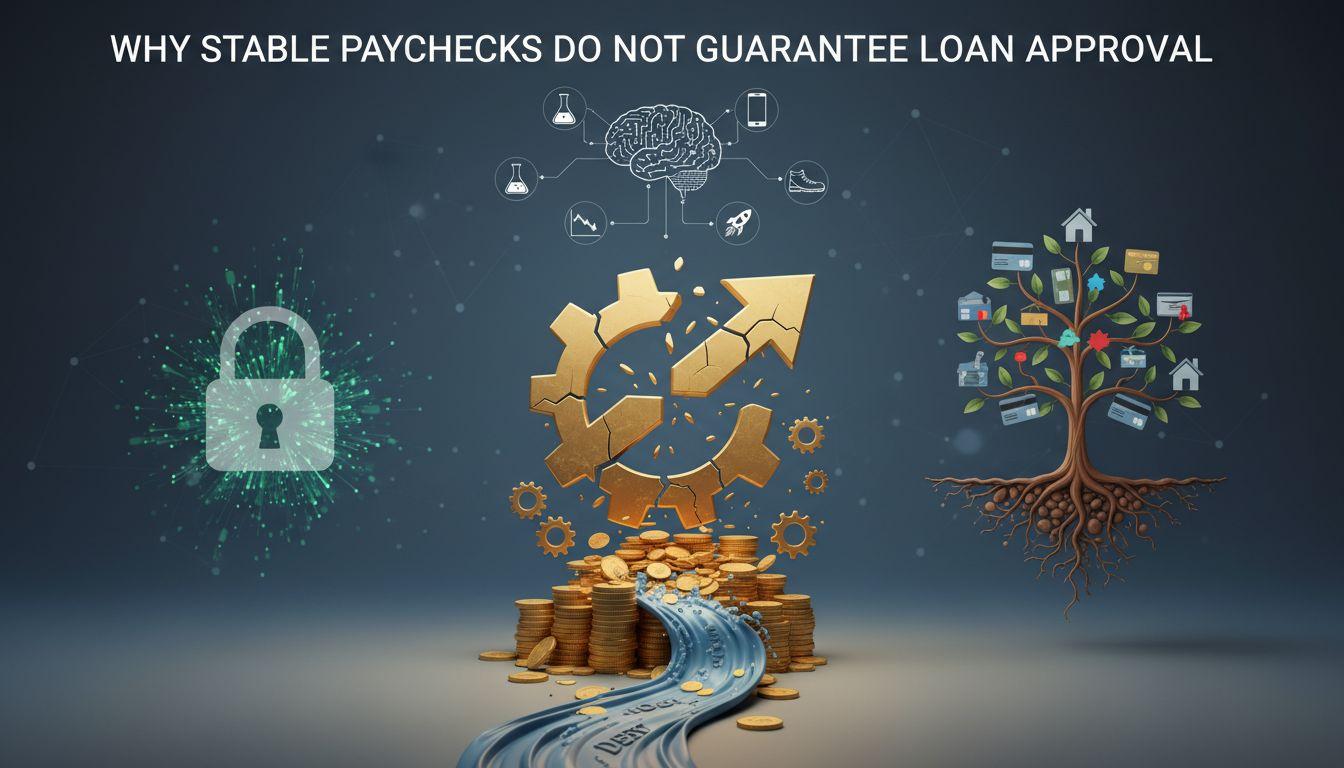
Stable Income Isn’t the Same as Stable Creditworthiness
Many borrowers assume that a steady paycheck is an automatic green light for loan approval. But from a lender’s viewpoint, income consistency is only one piece in a far more complex puzzle. The core issue is that reliable wages don’t directly reflect a borrower’s overall financial health or risk profile.While income stability provides a baseline for repayment capacity, lenders weigh multiple dimensions before committing capital—not just the inflow of cash.
So what happens under the hood? When a credit card issuer or mortgage lender evaluates an application, they initiate a layering process that synthesizes income with obligations, credit history, and assets. Income is the starting point for calculating ratios like debt-to-income (DTI),but a high income can be offset by heavy existing debt,past delinquencies,or erratic spending behaviors visible on credit reports.
Why Do Borrowers Equate Paycheck Stability with Guaranteed Access?
behavioral biases explain a lot here. People anchor on what feels tangible—their salary deposited every two weeks—becuase it’s immediate and predictable. They overlook subtler signals like revolving credit balances, missed payments years ago, or how they manage short-term liquidity. This focus on income alone stems from the simplification bias; it’s easier to claim “I have a job, so I’m a safe bet” than to navigate opaque credit risk modeling.
Another factor: borrowers frequently enough underestimate how financial institutions use choice data. For instance, issuer risk strategies incorporate transaction patterns on credit cards, savings account stability, and even overdraft occurrences. Such data can reveal behavioral red flags invisible in pay stubs. This behavioral blind spot causes many well-employed individuals to be surprised when their loan applications stall.
Trading a Stable Paycheck for Broader Financial Signals
Let’s compare what lenders gain and give up when they hinge decisions mostly on income. If loan providers relied solely on paycheck continuity:
- Gain: Easier verification, fewer administrative steps.
- Sacrifice: Elevated credit risk from ignoring underlying borrower behavior.
Conversely, incorporating credit history and other borrower metrics improves default prediction accuracy but requires more complex, time-consuming reviews. From the borrower’s perspective, this means a smooth, fast approval if you fit the narrow “income only” criteria—but a ample chance of rejection if your full profile reveals risk, despite your paycheck.
Thus, depending on paycheck stability alone risks both lender capital and borrower trust in capital access.
What Loan Outcomes Unfold Over Time when Income Is Overvalued?
Initially, stable income might mask underlying vulnerabilities—like rising credit utilization or lack of savings—which manifest later as missed payments or defaults. Pricing models on loans and mortgages anticipate this: higher stable income without credit discipline may lead to interest rate premiums or stricter terms.
Over years, the borrower who relies on paycheck alone without managing credit balances or emergency reserves may find refinancing challenging, or insurance premiums higher as their risk score erodes. Lenders themselves adjust risk strategies dynamically, increasingly penalizing “income-only” profiles with thinner data.
When a robust Paycheck Isn’t Enough — Adaptive Strategies for Borrowers
Suppose you have a stable paycheck but limited credit history or high debt. What practical steps can improve your standing? Start by recognizing that lenders want a complete story:
- Monitor your credit reports to catch errors or outdated delinquencies.
- Reduce revolving debt to improve debt-to-income and credit utilization ratios.
- Build liquidity buffers to demonstrate financial resilience beyond income.
- Use credit products judiciously to develop positive payment history.
These moves complement your paycheck, signaling to lenders a lower overall risk profile—and a better chance for loan approval and favorable terms.
Hidden Hazards in Issuer risk Modeling Beyond paychecks
Lenders also face challenges capturing borrower risk accurately. What if someone frontloads spending immediately after payday, then maxes out credit lines before the next paycheck? Or if their income is stable but sourced from gig work with limited predictability at contract renewal? These nuanced borrower behaviors pose default risks that paycheck data alone won’t capture.
Moreover, sudden life events — illness, job market shifts, or unexpected expenses — can disrupt otherwise stable paychecks. Issuers hedge against these tail risks by layering credit scores, employment history length, asset verification, and behavioral analytics like transaction velocity or account churn.
Without this sophistication, lenders risk either approving unsafe applicants or unnecessarily declining creditworthy ones.




Have any thoughts?
Share your reaction or leave a quick response — we’d love to hear what you think!
-
 0
0
-
 0
0
-
 0
0
-
 0
0
-
 0
0
-
 0
0