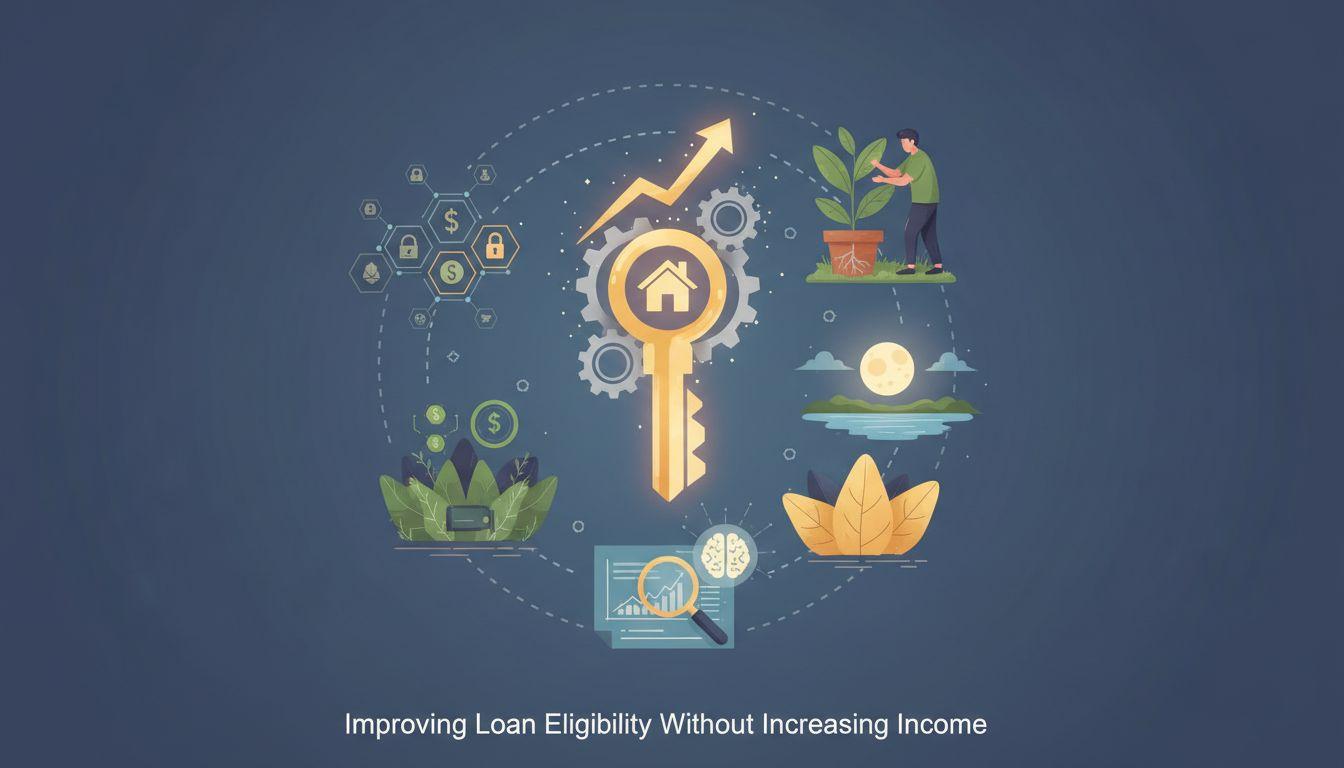
Improving Loan Eligibility Without Increasing Income: What Really Moves the Needle
The Illusion of Income as the Sole Lever
we tend to obsess over income when discussing loan eligibility — as if a bigger paycheck alone unlocks better borrowing terms.Yet, lenders take a far more nuanced view. They’re balancing risk models and borrower profiles, layering credit behavior, debt levels, and asset quality above raw income figures.
So, if you can’t or won’t increase yoru income, can you still improve eligibility? Absolutely — but not by chasing illusions. It happens by optimizing the factors lenders truly weight.
How Underwriting Models Digest Borrower Data
The Mechanic’s View: Beyond Paychecks and Deductions
Let’s walk through what an automated underwriting system (AUS) or analyst sees:
- Income verification: Usually, lenders verify documented income versus stated income.
- Debt-to-income (DTI) ratio computation: Total monthly debt payments divided by gross monthly income. This ratio is critical—frequently enough capped at around 43-50% depending on the product.
- Credit score and history: Payment timeliness, credit mix, credit utilization—all aggregated into a numerical score.
- Liquidity and assets: Cash reserves, investments, sometimes retirement accounts.
- Collateral value: for mortgages or secured loans,the loan-to-value (LTV) ratio matters.
Notice how income enters primarily as a denominator in DTI. The numerator—monthly debt obligations—is equally influential. so lowering monthly debts or restructuring them can effectively improve eligibility more than waiting for a pay raise.
Why Do borrowers Overlook Debt Ratios and Credit Behavior?
The Behavioral Lens: Anchoring on Income,Ignoring Modifiable Habits
Human psychology often skews financial decisions toward simplistic markers like “more income = better loans.” This anchors thinking on what seems immutable—your paycheck—rather than focusing on what’s actionable.
Common misjudgments include:
- Treating credit cards as a safety net rather than a risk factor—high utilization signals stress to issuers.
- Neglecting the impact of revolving debt payments on monthly obligations,even if income is stable.
- believing that paying off small loans rarely affects eligibility, when in reality reducing the total monthly payments improves DTI.
Generally, borrowers underestimate how credit behavior and debt management signal risk. It’s not a moral judgment but a predictive one for lenders.
Cutting Debt or Consolidating: What’s Really Traded Off?
The Comparative Analysis: Low Monthly Payment vs Rising Total Debt Cost
Suppose you consolidate high-interest credit card debt into a personal loan with a lower monthly payment. Hear’s what changes—and where the trade-offs lie:
| Aspect | Before Consolidation | After Consolidation | Trade-Off |
|---|---|---|---|
| Monthly Debt Payments | High, volatile with cards | lower fixed payment | Improves DTI, enhancing eligibility |
| Total Interest Over Time | High (revolvers typically 15-25%) | Lower rate, but longer term | Possibly more total interest paid |
| Credit Utilization Impact | High utilization damages scores | Cards paid off, utilization drops | Usually improves credit score over time |
| Flexibility | Revolving credit with minimum | Fixed installment commitment | reduces borrowing flexibility |
Increased eligibility may come at the cost of less liquidity and longer total interest. Good borrowers can see eligibility gains and credit score improvement, but those operating dangerously close to limits may feel cash flow stress.
Playing the Long Game in Credit management
The Time Dimension: How Behavior Shapes Future Options
Short-term tactics—such as clearing a small credit card balance or switching to a secured credit card—can create immediate eligibility bumps. But sustainability matters:
- Payment history accumulation: Lenders place outsized weight on consistent, on-time payments over time.
- Credit mix diversification: Balancing installment loans with revolving accounts can prove creditworthiness.
- avoiding new inquiries: Shopping for loans aggressively can signal risk and temporarily lower scores.
Effective loan eligibility improvement is rarely a one-off fix; it’s a trajectory. Focus on durable behavioral changes rather than cosmetic fixes that lenders detect and discount.
Who Really Benefits From Lower Debt Load: Borrower or Issuer?
The Stakeholder Outlook: Aligning Incentives for Better Outcomes
Lenders want reliable repayments with minimal default risk; borrowers want borrowing power with manageable costs.But their incentives don’t always align perfectly:
- Lenders prefer clients with stable income, low DTI, and solid credit history, which reduces default probability.
- Borrowers seek as much credit as possible, sometimes taking on debt that strains repayment ability.
Reducing debt load and monthly obligations concurrently satisfies lender’s risk appetite and borrower’s eligibility goals. However, some loan products (like credit cards) may tempt borrowers into behaviors that improve short-term liquidity but worsen long-term credit quality.
Recognizing this incentive mismatch helps borrowers make smarter choices about when to pay down versus when to access credit product features.
When Simplistic Fixes Backfire
The Risk Archaeologist: Hidden pitfalls in Eligibility Maneuvers
Trying to game loan eligibility without increasing income can backfire in subtle ways:
- rapidly opening and closing credit accounts: Frequent account activity can trigger risk flags and multiple hard inquiries,lowering scores.
- Ignoring revolving utilization spikes: Paying down one card but using another heavily can cancel out benefits.
- Reducing debt at the expense of emergency liquidity: Over-aggressive debt repayment with no safety net increases default risk, hurting eligibility long-term.
- Debt consolidation without comparison shopping: One consolidation loan can improve DTI but might carry higher fees or restrictive terms.
These failure points frequently enough result from misunderstanding what lenders truly assess beyond surface-level metrics.
Deciding What to Do With Existing Credit
The Decision Architect: Filtering Options Through Your Specific Financial Context
How should you decide which path to take for improving eligibility?
Consider these criteria:
- Current DTI and debt structure: Is monthly debt crushing your borrowing capacity?
- Credit score health: Are utilization and payment history dragging your score down?
- Available liquidity: Do you have reserves to buffer repayment shocks?
- Loan purpose and timeline: For urgent mortgage or car loans, quicker fixes may be prioritized; for long-term credit building, more gradual improvement works.
Apply this framework before choosing to consolidate, pay down cards selectively, or restructure debt. Not all tools fit all needs equally.
Why No-Income Boost Strategies Still Need a solid Financial Foundation
Ultimately, improving loan eligibility without increasing income means working smarter with what you do control—debt management, credit behavior, and asset maintenance. Most people underestimate how dynamic lenders’ pricing models are in evaluating these factors.
But success depends on thoughtful execution, avoiding costly pitfalls, and recognizing that creditworthiness is a composite, evolving picture—not a single metric you can tweak overnight.
For those curious how other facets—like insurance profiles, banking relationships, or investment assets—play a role, it’s worth exploring integrated financial strategies that lenders increasingly consider, but that’s a deeper dive for next time.
In the meantime,focus on the levers you can actually move and check your assumptions about income’s primacy. It may surprise you how effectively eligibility can respond when you optimize debt and credit flows.




Have any thoughts?
Share your reaction or leave a quick response — we’d love to hear what you think!
-
 0
0
-
 0
0
-
 0
0
-
 0
0
-
 0
0
-
 0
0